Some links below are affiliate links — if you buy through them, No-Money Music may earn a small commission at no extra cost to you (full disclosure). We only point to gear we'd actually use.
Somewhere tonight, a hit demo is being sung into a closet full of winter coats. The room you have is workable — you just have to know what the room is actually doing to you, and how to get out of its way.
The problem isn't noise — it's reflections
That hollow, boxy sound on bedroom vocals isn't your mic being cheap. It's your voice bouncing off bare walls and arriving back at the mic a few milliseconds late. Fix the reflections and a modest mic sounds expensive. Ignore them and no mic can save you.
The closet is a vocal booth
A closet full of hanging clothes is free, dense, irregular absorption — genuinely better than the foam-lined corners you see online. Face into the clothes, mic between you and them, door mostly shut. Some of the demo vocals that made it onto records were cut exactly this way.
The moving blanket trick
Moving blankets are the working musician's secret: thick, cheap, and absorbent. Drape them over a couple of mic stands or a doorway to build an instant vocal corner, then fold them away when you're done. Two or three blankets outperform a wall of thin decorative foam.
The reflection filter — the finishing touch
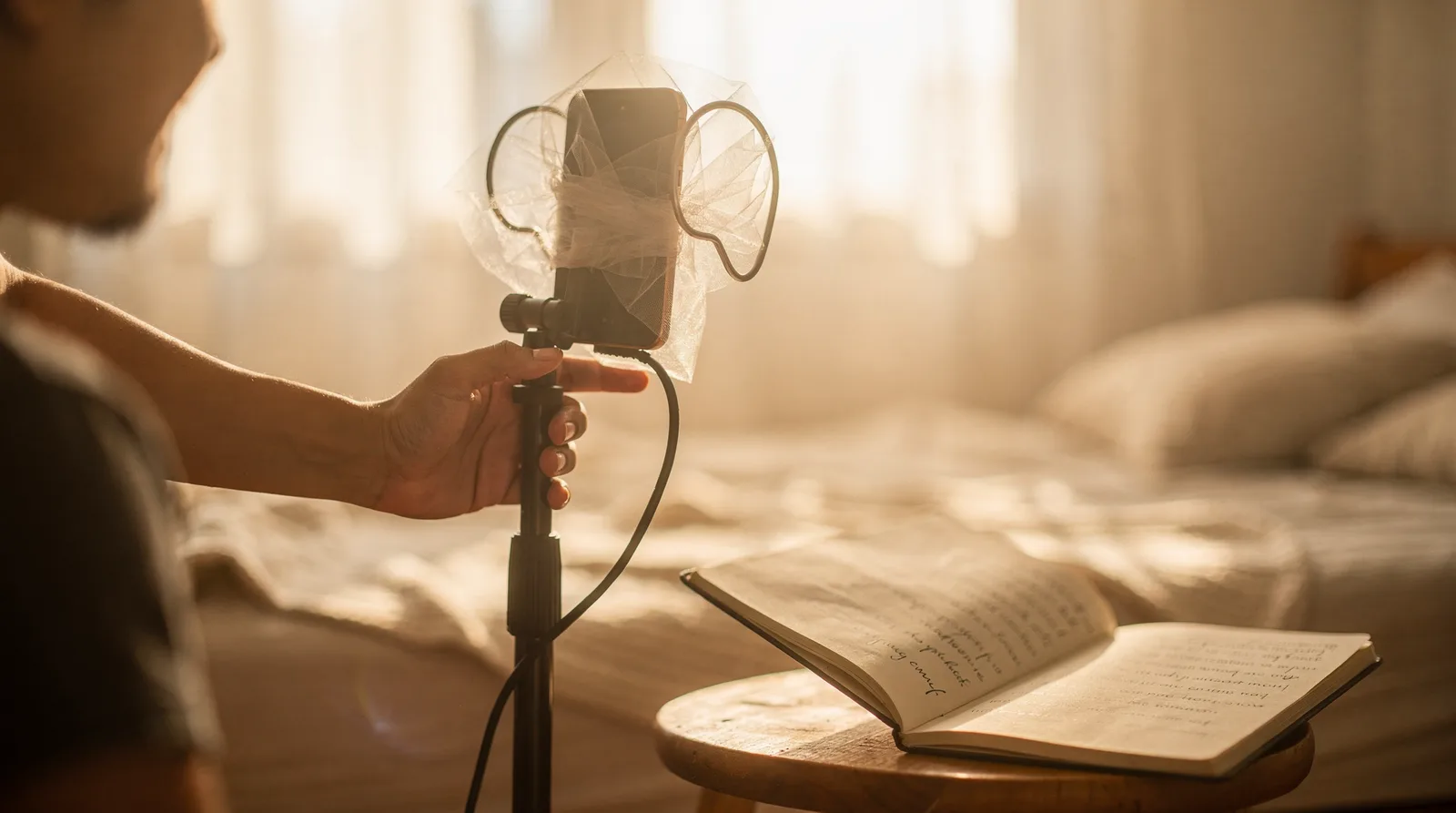
A reflection filter behind the mic catches what the blankets miss. It's a helper, not a booth — pair it with the blankets or the closet, and don't expect it to fix a bare room alone.
Choose the mic that ignores the room
A dynamic mic like the Shure SM58 hears far less room than any condenser, because you sing close and it rejects everything behind you. In a bad room, a dynamic up close beats a condenser at any price — the full comparison is in SM58 vs SM7B.
Position like you mean it
Sing toward the absorbent stuff, never toward a bare wall or window. Get out of the exact center of the room, keep the mic off the walls, and stay close to it — six inches with a pop filter. Distance is where rooms live.
The whole recipe: closet or blanket corner, dynamic mic up close, pop filter, sing toward the soft stuff. Total cost: under $150 including the microphone.
When you're ready to fix the room itself instead of working around it, start with treating a bedroom studio for cheap.
Want the Whole Blueprint?
Gear is one piece. The free workbook walks through the no-budget steps in order, and every pick above is listed on the free gear page.