Some links below are affiliate links — if you buy through them, No-Money Music may earn a small commission at no extra cost to you (full disclosure). We only point to gear we'd actually use.
The cheapest upgrade to your sound isn't a new mic — it's killing the echo bouncing around your room. A $100 mic in a treated closet beats a $400 mic in a bare bedroom, every time. Here's how to fix your room for almost nothing, plus the myth that wastes everyone's money.
Myth first: foam is not soundproofing
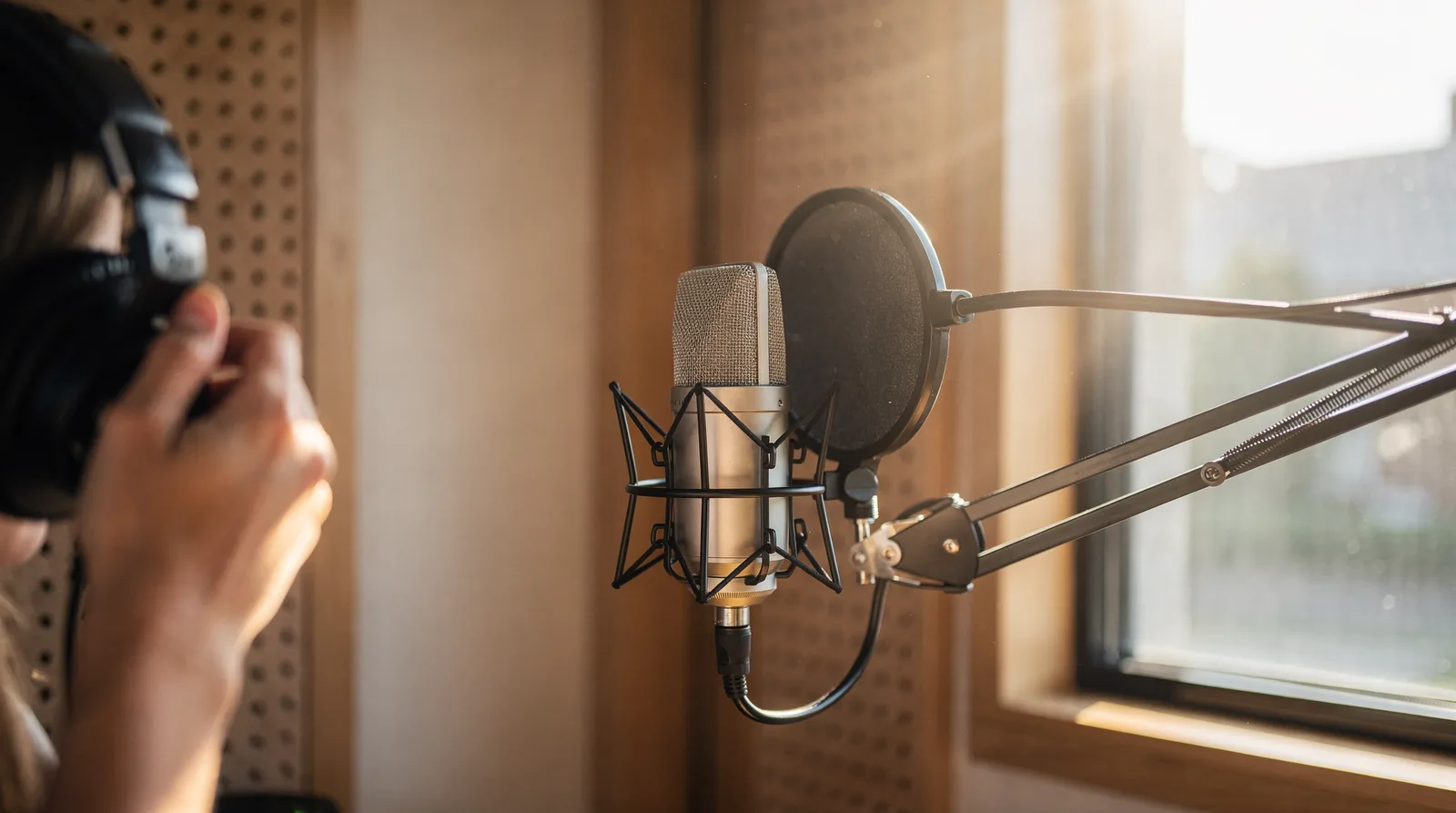
Let's kill the big one. Acoustic foam does not stop sound from leaving the room — that's soundproofing, and it's expensive construction work. What foam does is treat the room: it tames the echoes and reflections that make home recordings sound boxy and amateur. That's the part that actually affects your tracks — so that's what we'll fix.
The free moves (do these first)
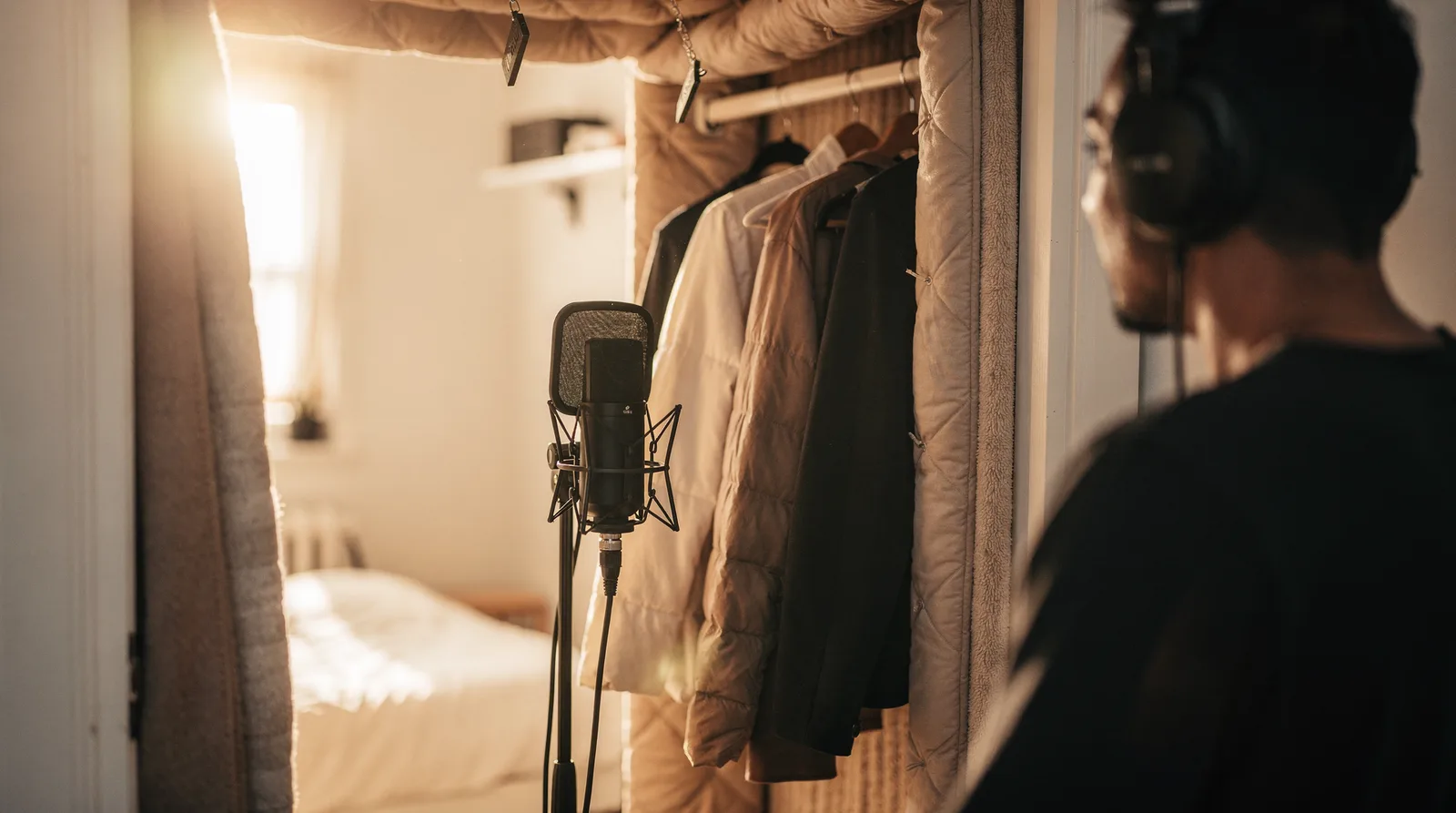
Record in the smallest, softest space you have. A closet packed with clothes is a free, dead-sounding vocal booth. Soft furniture, rugs, and a bookshelf all absorb reflections. Get the mic away from bare walls. This costs $0 and gets you most of the way.
The cheap buys, in the order that matters
- ~$20 — Moving blankets. Hang them around your mic. The no-money classic.
- ~$40 — Acoustic foam panels on the walls nearest your mic. Biggest visible-and-audible upgrade for the money.
- ~$60 — A mic reflection filter wraps the back of your mic and instantly cleans up vocals in a bad room.
- ~$50–90 — Corner bass traps tighten the boomy low end once the basics are handled.
What I'd do first: record in a closet, hang a couple of moving blankets, done — for $20. Add foam and a reflection filter when you want a cleaner result. You'll hear the difference before you spend a cent on a new mic.
Treated your room? Now the gear pays off — see the best home vocal mics or build the whole thing with the $200 studio guide.
Want the Whole Blueprint?
Gear is one piece. The full step-by-step system for building a real music career with no budget lives in the book — and every pick above lives on the free tools page.