Some links below are affiliate links — if you buy through them, No-Money Music may earn a small commission at no extra cost to you (full disclosure). We only point to gear we’d actually use. Every price on this page was read off the product’s own Amazon page on 22 September 2026 — prices move, so check before you buy.
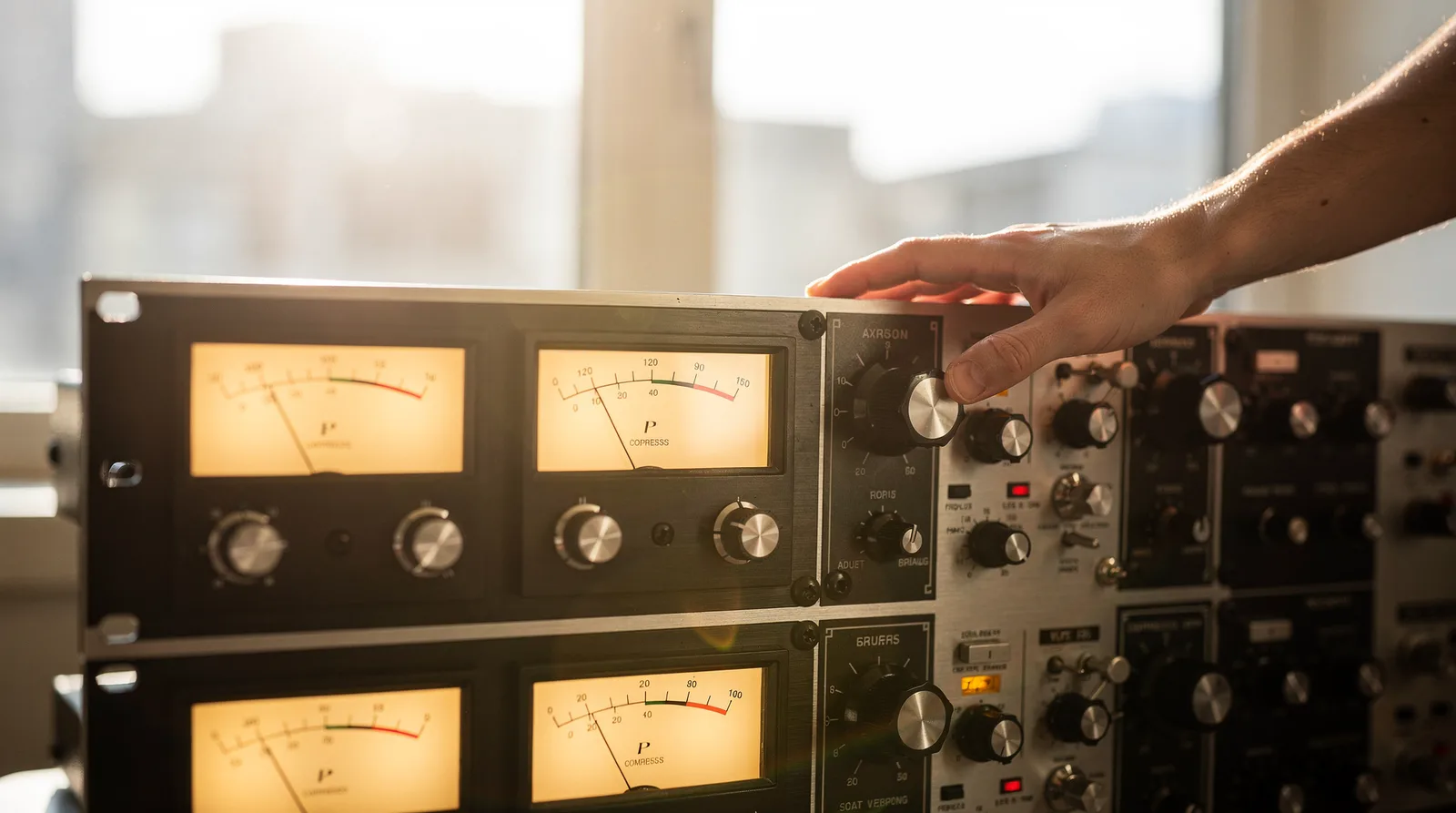
This is a short page because the answer is short. You already own a microphone preamp. It is inside your audio interface, and for almost everyone reading this, it is entirely sufficient.
The $0 answer: you have one already
Every audio interface with an XLR input contains a microphone preamp. That is most of what an interface is — a preamp, phantom power and a converter in a box. When someone says “you need a preamp,” what they usually mean is “you need an interface,” and if you have an interface, you are done.
So the real question is not whether to buy one. It is whether you are using the one you own correctly.
Gain staging, which is what the problem actually is
Turn the gain knob up until the loudest part of your performance peaks around −12 to −6 dB on your DAW’s meter. Not near 0, which leaves no headroom and clips on the one take that mattered. Not down at −30, which is the real cause of nearly every “my recordings are noisy” complaint — quiet recordings get turned up later, and turning them up turns the noise up with them.
Get close to the microphone. Doubling your distance from a microphone costs you roughly 6 dB, which is a large amount of gain you are then asking the preamp to manufacture. Three inches closer does more than any hardware on this page.
The cheap rung: nothing. Do not buy anything here.
There is no purchase under $50 that improves a preamp. Inline boosters at that price are the ones worth avoiding, and when this page was written the commonly-recommended budget booster was not available on Amazon at anything like its normal price. If you have hiss, work through the gain staging above, then check your cable, then check whether your microphone is simply a quiet one. In that order.
The one case where it is real
Some dynamic microphones — the Shure SM7B is the famous one — put out a very low signal and need roughly 60 dB of clean gain. Cheap interfaces run out before that, and what you hear is hiss. This is a genuine hardware limit, not a technique problem.
The usual fix sold for this is an inline booster at around $150. Buy a better interface instead. For less money you get more gain and more inputs and better converters, rather than a single-purpose box bolted onto a weak one. The Behringer UMC404HD ($139.00) has four inputs and plenty of gain; the Focusrite Scarlett Solo 4th Gen ($159.99) is the one-input version if you only ever record one thing at a time.
What nobody needs
A “colour” preamp, until you can reliably hear the difference between two microphones — and if you can, you already know whether you want one. A channel strip with a compressor built in, which welds decisions into the recording that software can make better afterwards and undo. And a booster bought before checking the gain knob, which is most of them.
You own a preamp. Set the gain so peaks land near −12 dB, and get closer to the microphone. If you genuinely run out of gain, replace the interface rather than bolting a $150 box onto it.
Three pages on this site that carry it further: The resources list · The best audio interface for beginners · Shure SM58 vs SM7B.
Want the Whole Blueprint?
Gear is one piece. The step-by-step system for building a music career with no budget lives in the workbook.