Some links below are affiliate links — if you buy through them, No-Money Music may earn a small commission at no extra cost to you (full disclosure). We only point to gear we'd actually use.
The audio interface is the most over-marketed purchase in home recording. Most beginners buy one too soon, or spend three times what they should. Here's the honest breakdown: what it does, whether you need it yet, and exactly which one to get when you do.
An audio interface is the most misunderstood purchase in home recording. You don't always need one, you definitely don't need an expensive one, and the marketing around them is designed to make you overspend. Here's what's actually true.
What an interface even does
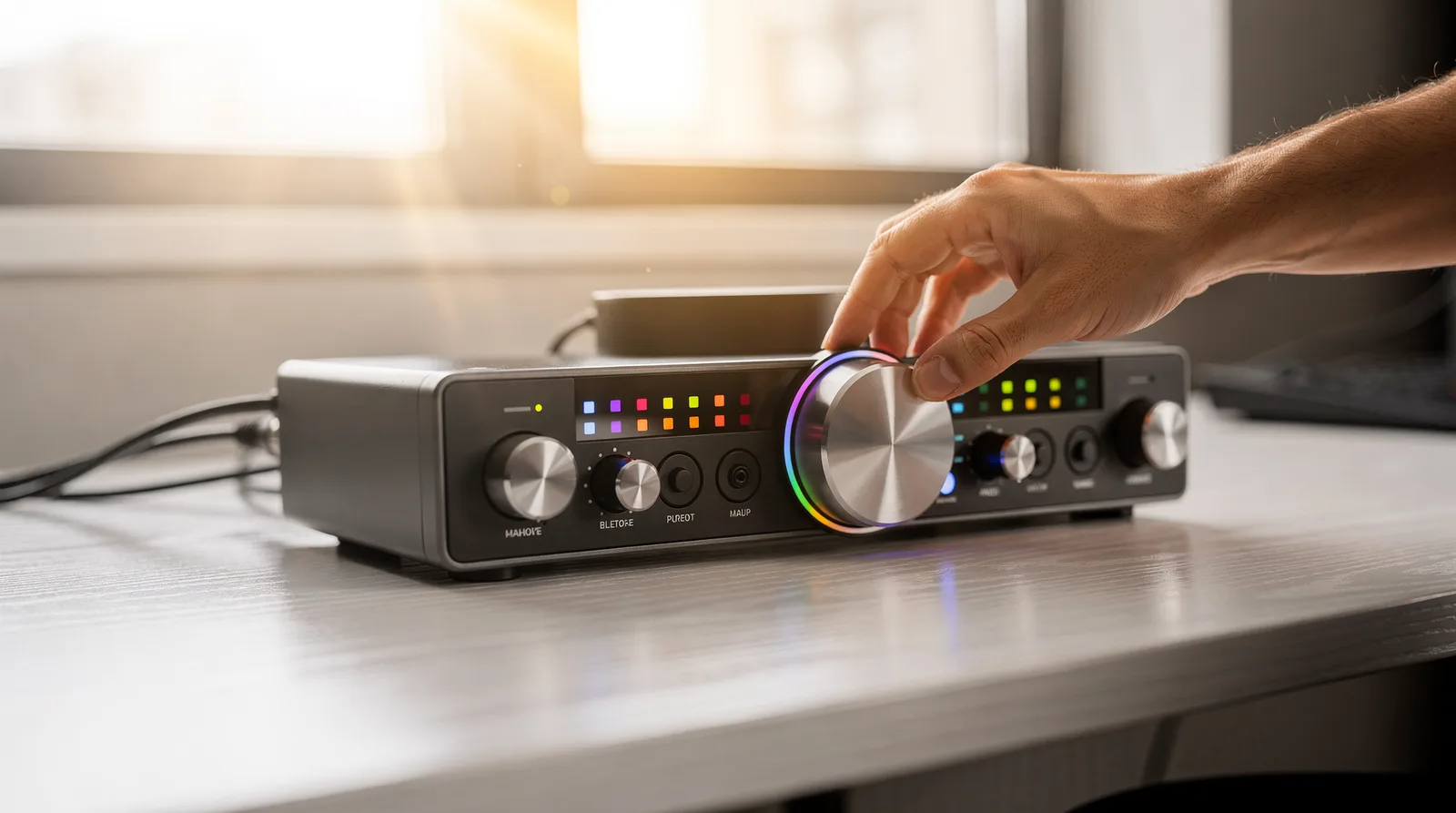
It's the bridge between a professional (XLR) microphone and your computer. It gives the mic clean power and converts its signal into something your DAW can record, usually with far lower latency than plugging in directly. That's it. It's plumbing — important plumbing, but plumbing.
Do you even need one?
If you bought a USB mic, no. A USB mic has a tiny interface built in. You only need a standalone interface when you move to XLR mics, want to record an instrument, or need two things at once. Don't buy one before you need it.
Best under $100
The Behringer UMC22 (~$60) is the cheapest interface I'd trust with a real session. The PreSonus AudioBox USB 96 (~$99) is a rugged two-input workhorse that even ships with recording software.
The standard: ~$200
If you want to buy once and keep it for years, the Focusrite Scarlett 2i2 (~$200) is a very widely used home interface — two inputs so you can track vocals and guitar, clean preamps, great bundled plugins. The single-input Scarlett Solo (~$130) is the cheaper sibling if you'll only ever record one thing at a time.
How many inputs do you need?
Recording one voice at a time? One input is fine. Want to mic a guitar and sing together, or record two people? Get two. Most home artists never need more than two — don't pay for eight inputs you'll never plug into.
What you can safely ignore
Sample rates above 48kHz, boutique converters, gold-plated everything — for a bedroom setup, none of it will make or break your record. Your mic placement, your room, and your performance matter a hundred times more than the interface's spec sheet.
Simple rule: USB mic = no interface needed yet. Going XLR = a $60 UMC22 to start, or the $200 Scarlett 2i2 to buy once and forget. See all the picks on the interfaces section.
Want the Whole Blueprint?
Gear is one piece. The full step-by-step system for building a real music career with no budget lives in the free workbook — and the full free tools list is a click away.