Some links below are affiliate links — if you buy through them, No-Money Music may earn a small commission at no extra cost to you (full disclosure). We only point to gear we’d actually use. Every price on this page was read off the product’s own Amazon page on 22 September 2026 — prices move, so check before you buy.
An acoustic guitar recording is decided by where the microphone is pointing, not by what the microphone cost. Move a cheap mic six inches and you will hear a bigger change than swapping it for one ten times the price.
The $0 way: your phone, in the right place
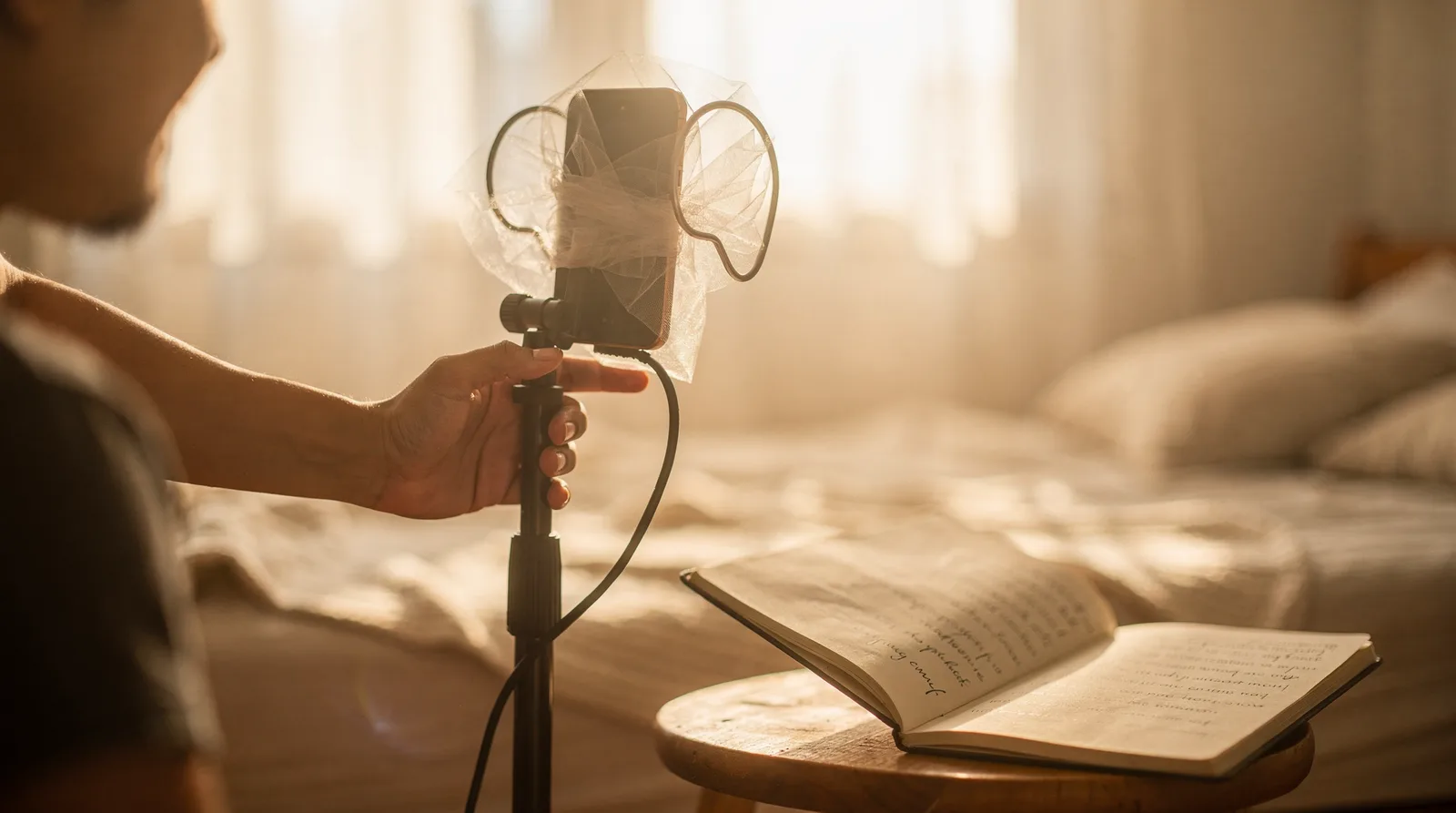
Put your phone on a cushion about eight inches from the guitar, pointed at the twelfth fret — where the neck meets the body — and angled slightly up the neck. Not the soundhole. The soundhole is a bass port; aim at it and you get the boomy, cardboard-box sound that makes people think they need better gear.
Play the part three times without listening back. Then listen. Nine times out of ten the fix is not equipment: move six inches further away, or rotate a few degrees toward the neck, and record again.
The three placements worth knowing
Twelfth fret, 8–12 inches: the default. Balanced, close, works on almost every guitar. Over the shoulder, pointing down at the bridge: darker, less pick noise, good for a singer who moves. Two feet back, level with the player’s chest: the most natural sound in the room, and the most room you will hear — only use it if the room is quiet and not square.
If the recording sounds thin, get closer. If it sounds boomy, move off the soundhole. If you hear the room more than the guitar, get closer and put something soft behind the microphone. That is the entire skill.
The cheap rung, told honestly: there isn’t a good one under $50
This is the page where the ladder has a gap, and pretending otherwise would be the easy lie. Condenser microphones under $50 are mostly worse than the phone already in your pocket, because the phone has years of signal processing behind it and a $30 no-name capsule does not. Spend nothing here and get better at placement instead.
The cheapest microphone I would actually plug in is the Behringer C-1U ($53.90 on the day of writing, and stock was low). It is USB, so it needs no interface at all — which is the real reason it belongs on this ladder rather than a cheaper XLR mic that quietly requires another $100 of hardware to work.
The buy-once pick
The Audio-Technica AT2020 ($119.00) is the microphone most home studios end up at, and it stays useful when you move on to vocals. It is XLR, so it needs an interface. If you do not have one and do not want one, the Audio-Technica AT2020USB-X ($168.00) is the identical capsule with the interface built into the microphone — one cable to the computer, nothing else to buy.
Worth saying plainly: the USB version costs more than the XLR version. You are paying for not needing an interface, which is a reasonable thing to pay for if you never plan to record anything else.
What nobody needs
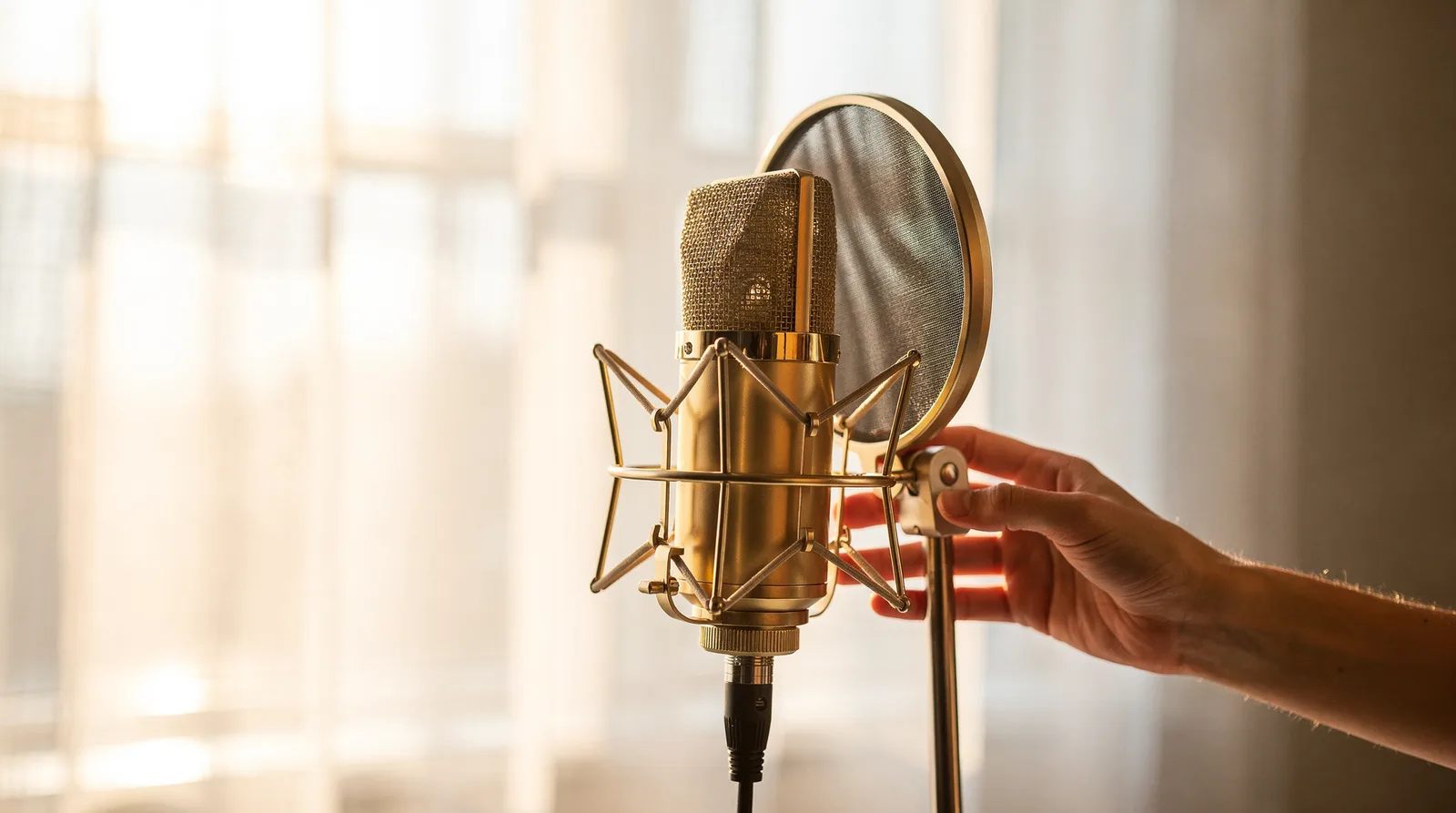
A matched stereo pair. A ribbon microphone. A pop filter on an acoustic guitar — there are no plosives coming out of a guitar. A shock mount matters more than any of these, and a folded towel under the mic stand does most of what a shock mount does for nothing.
Point it at the twelfth fret, not the soundhole, and move it before you buy anything. Placement is the largest single variable on this page, and it costs nothing.
Three pages on this site that carry it further: The resources list · Recording in an untreated room · The best microphone for home vocals.
Want the Whole Blueprint?
Gear is one piece. The step-by-step system for building a music career with no budget lives in the workbook.